LOADING LOADING

Engineering & Design

  • Home
  • Engineering & Design
img

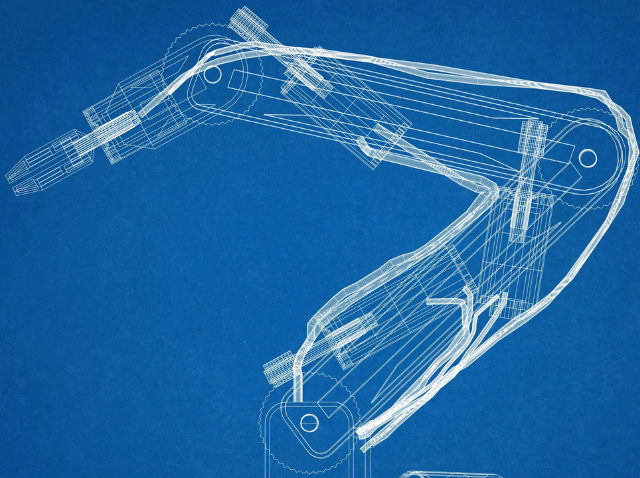
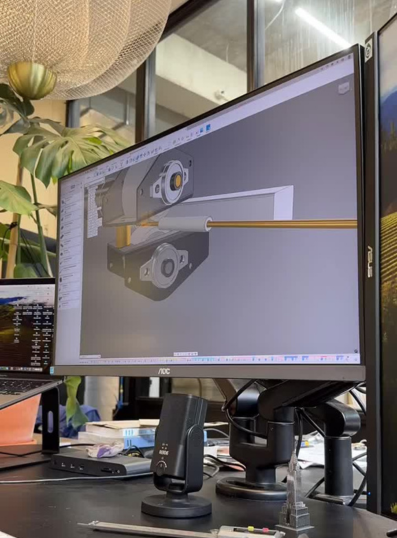
We approach robotics engineering through structured decomposition of complex systems into clearly defined functional layers. Each project begins with system-level understanding before any detailed design work is produced. Requirements are translated into architectural models that connect mechanical, embedded, and control domains. Decisions are evaluated in terms of system impact, not isolated performance. This ensures coherence across all engineering directions and reduces downstream ambiguity during development.

img

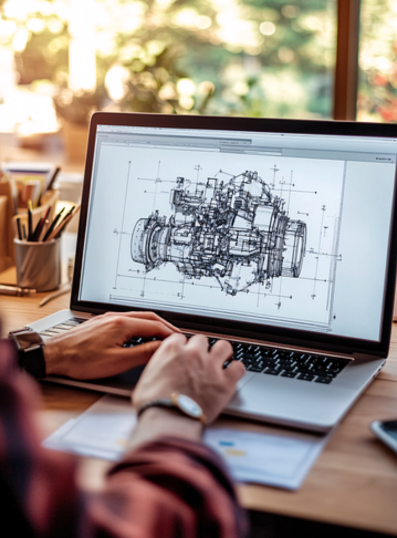
Our work process is iterative and model-driven, relying heavily on abstraction, simulation, and cross-domain validation. Concepts are first expressed as functional models, then refined through analytical reasoning and virtual testing before detailed implementation is defined. Each iteration improves alignment between system behavior and intended performance. We prioritize early detection of design conflicts through structured review cycles, allowing issues to be resolved at the conceptual stage rather than during integration.

img

Collaboration and documentation are treated as core engineering outputs rather than secondary activities. Every design decision is traceable through structured documentation that connects requirements, assumptions, and technical outcomes. Communication between domains is formalized through interface definitions and shared system models. This creates a consistent engineering language across disciplines, ensuring that mechanical, embedded, and control designs remain aligned throughout the entire development process.

img

Our Capabilities

Team

Robotics System Design & Architecture

Robotic system architecture is developed by defining functional requirements, constraints, and operational goals. Engineers structure how sensing, computation, and actuation interact within a coherent framework. Design decisions focus on modularity, scalability, and long-term maintainability. System-level trade-offs are evaluated to balance performance, cost, and complexity. The result is a clear blueprint that guides all downstream engineering work.

Team

Mechanical Design Engineering

Mechanical concepts are translated into detailed engineering designs using CAD and analytical methods. Structures, joints, and motion systems are developed to meet performance and durability requirements. Material selection and geometric optimization support efficiency and strength. Kinematic layouts are refined to ensure accurate and controlled movement. All designs are documented for further development and external implementation.

Team

Embedded Systems & Firmware Development

Firmware is designed to enable precise coordination between sensors, processors, and actuators. Embedded code is developed for real-time control, data acquisition, and system communication. Efficiency and reliability are prioritized to ensure deterministic behavior. Hardware interfaces are carefully specified to support seamless integration. Development focuses on stable, maintainable control logic.

Team

Control Systems Engineering

Mathematical modeling is used to describe and predict robotic behavior under different conditions. Control algorithms are designed to regulate motion, stability, and responsiveness. Feedback systems are tuned to minimize error and improve precision. Simulation-based analysis supports validation of control strategies. The emphasis remains on robust theoretical and computational design work.

Team

Simulation & Digital Twin Development

Virtual models of robotic systems are created to evaluate performance before physical realization. Physics-based simulation environments replicate motion, sensing, and environmental interactions. Design assumptions are tested and refined through iterative virtual experiments. Digital twins support validation of control strategies and system behavior. Insights are used to improve engineering decisions at the design stage.

Team

Systems Integration Engineering (Design-Level)

Integration planning defines how mechanical, electrical, and software subsystems interact at a conceptual level. Interface specifications are developed to ensure compatibility across disciplines. Engineering effort focuses on resolving system-level dependencies and constraints. Risk areas are identified early through design review and modeling. The output is a structured integration framework for future implementation.

Team

Autonomy & Perception Systems Design

Algorithms for perception and decision-making are designed to interpret sensor data and environmental inputs. Computer vision and sensor fusion methods are specified for object detection and tracking. Behavioral logic is structured for autonomous operation under defined scenarios. Computational requirements are evaluated for real-time feasibility. The work remains focused on algorithmic and system design rather than deployment or production.