LOADING LOADING

Applications

Applications

Robotics Applications & Engineering Domains

Robotic systems vary significantly in their operational objectives, environmental constraints, and technical requirements. While every platform presents unique engineering challenges, many fall within established categories that share common architectural, mechanical, control, and autonomy considerations. Our engineering and design expertise spans a broad range of robotic applications, allowing us to apply proven methodologies across diverse industries and operating environments while tailoring solutions to the specific needs of each project.

Step 01

Autonomous Mobile Robotics

Autonomous mobile robotic systems are designed to navigate and operate independently within dynamic environments while maintaining reliable awareness of their surroundings. These platforms require the integration of mobility systems, perception architectures, localization frameworks, path planning algorithms, and real-time control systems. Engineering challenges often involve balancing navigation accuracy, computational efficiency, obstacle avoidance, and operational reliability. Successful development requires close coordination between sensing technologies, software architectures, control methodologies, and overall system design to achieve predictable autonomous behavior.

Step 02

Industrial & Process Automation Robotics

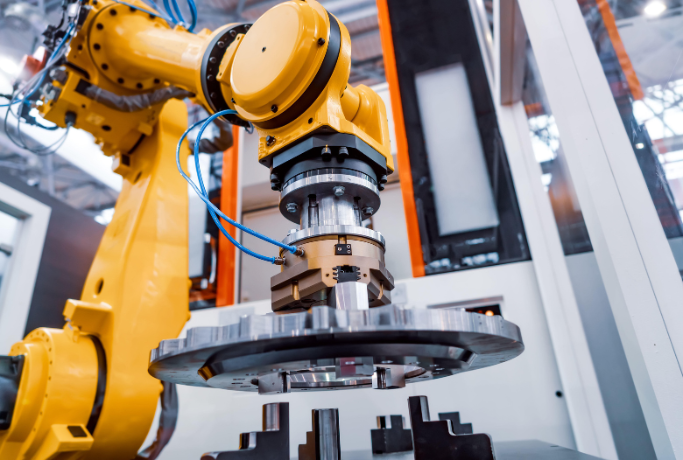
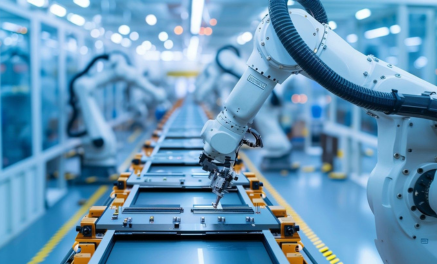
Industrial and process automation robotics focus on improving operational efficiency, consistency, and precision within production, processing, and industrial environments. These systems frequently combine advanced motion control, machine vision, sensing technologies, and deterministic control architectures to perform repetitive or highly controlled tasks. Engineering considerations include throughput optimization, precision requirements, reliability, timing constraints, and integration with broader operational workflows. Robust system architecture and structured engineering methodologies are essential to ensure long-term performance and operational stability under demanding conditions.

Step 03

Manipulation Systems

Robotic manipulation systems are engineered to interact physically with objects through coordinated motion, force application, and precise positioning. These platforms often involve articulated mechanisms, advanced kinematic structures, motion planning frameworks, and sophisticated control systems. Successful manipulation requires careful consideration of reachability, dexterity, dynamic behavior, payload characteristics, and environmental interaction. Engineering efforts focus on achieving accurate, repeatable movement while maintaining stability, responsiveness, and adaptability across a wide range of operating scenarios and task requirements.

Step 04

Warehouse & Intralogistics Robotics

Warehouse and intralogistics robotic systems are developed to support material movement, inventory management, asset tracking, and operational efficiency within logistics environments. These platforms must navigate complex facilities while interacting with changing workflows, dynamic obstacles, and operational constraints. Engineering challenges include fleet coordination, navigation reliability, traffic management, task allocation, and integration with warehouse management systems. Effective system design requires a combination of autonomous navigation capabilities, real-time decision-making, robust control architectures, and scalable operational frameworks.

Research & Experimental Robotics

Research and experimental robotic platforms are developed to support innovation, technology validation, and advanced engineering investigations. Unlike highly optimized production-oriented systems, these platforms often prioritize flexibility, modularity, and rapid iteration. Engineering requirements may evolve throughout development as new capabilities are explored and evaluated. As a result, system architectures must accommodate changing objectives while maintaining technical rigor and reliability. These projects frequently involve novel sensing approaches, advanced algorithms, experimental control methods, and emerging robotics technologies.
Heavy Equipment & Off-Highway Automation

Heavy equipment and off-highway automation systems apply robotics technologies to large-scale machinery operating in demanding environments such as construction, mining, agriculture, utilities, and infrastructure development. These applications involve significant engineering complexity due to large dynamic loads, environmental variability, safety requirements, and operational constraints. Development efforts often focus on autonomous operation, advanced control systems, perception technologies, and machine intelligence. Robust engineering design is essential to ensure reliable performance, maintain operational efficiency, and support safe system behavior under challenging real-world conditions.

Service Robotics

Service robotic systems are designed to perform operational tasks within commercial, institutional, and public-facing environments. These platforms often operate in close proximity to people and must function safely, predictably, and efficiently under varying conditions. Engineering considerations include navigation, environmental awareness, human interaction, task execution, and behavioral consistency. Service robotics frequently require a careful balance between autonomy, usability, and operational reliability. Successful system design demands close integration between sensing, control, software architecture, and user-focused functionality.