Mechanical design in robotics is the discipline of converting system-level behavior into physically
realizable motion structures. It is not simply about shaping components, but about designing how
forces, motion, constraints, and structural behavior interact to produce controlled and repeatable
robotic performance. This service focuses on developing mechanical systems that are deeply
integrated with system architecture, control requirements, and embedded constraints from the
earliest stages of design.
The process begins with conceptual exploration of multiple mechanical configurations. Each
concept represents a different way of achieving the same functional objective, often varying
significantly in kinematic structure, actuation strategy, and force transmission approach. These
early-stage designs are evaluated not only for feasibility but for how well they align with systemlevel requirements such as responsiveness, precision, stiffness, and energy efficiency.
Once a concept is selected, it is refined into a high-fidelity mechanical model. This includes full
geometric definition, motion constraint mapping, and structural behavior modeling. At this stage,
design decisions begin to have direct implications on system performance, particularly in relation to
control stability and sensor accuracy.
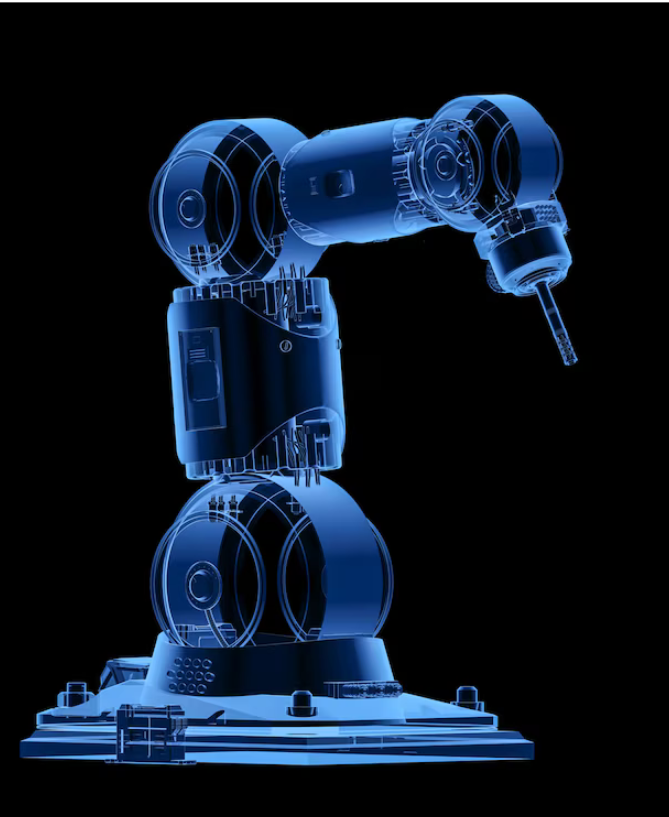
Mechanical systems are also evaluated in terms of their interaction with control systems. Even small
variations in stiffness or inertia distribution can significantly affect feedback control performance.
For this reason, mechanical and control considerations are tightly coupled throughout the design
process.
Material selection plays a central role in mechanical system performance. Different materials
introduce different trade-offs in stiffness, weight, damping, fatigue resistance, and environmental
durability. These factors are analyzed in context rather than isolation, ensuring that material choices
align with system-level behavior goals.